





In brief
- AMC Theatres has backed out of screening "Thanksgiving Day," an award-winning AI generated short film.
- The film's distributor, Screenvision Media, announced the two-week national theatrical run as a prize without confirming participation from exhibitors.
- The backlash lands as Hollywood strengthens its war over AI, with a new industry coalition, A-list stars racing to trademark their own likenesses
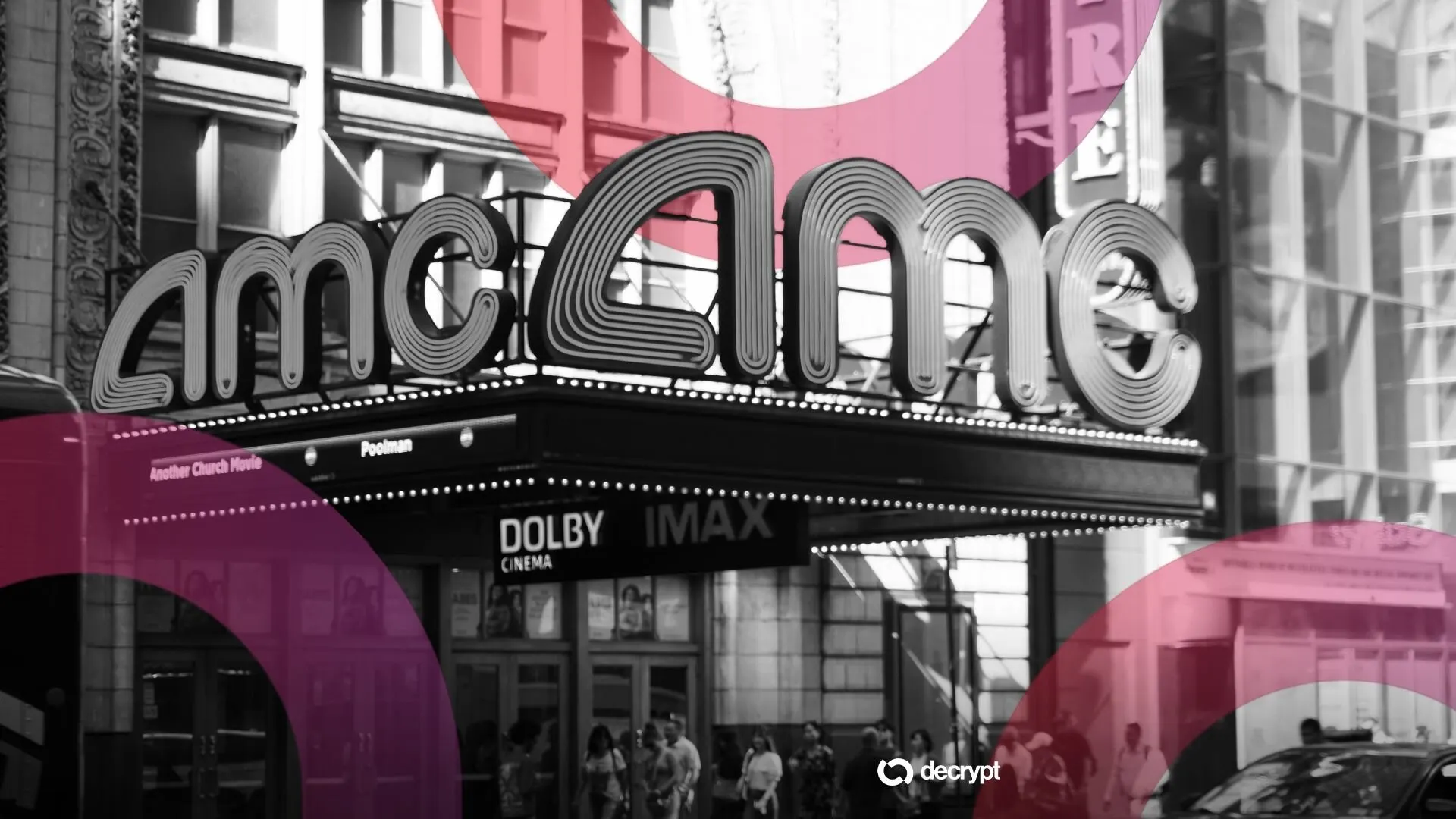
AMC Theatres has blocked an AI-generated short film from screening at its cinemas, amid an ongoing debate over the use of generative AI tools in filmmaking.
The nation’s largest theatrical exhibitor said it will not participate in the planned rollout of “Thanksgiving Day,” an AI-animated short that won the inaugural Frame Forward AI Animated Film Festival and was slated for a two-week run in U.S. cinemas through advertising distributor Screenvision Media, according to film industry trade paper The Hollywood Reporter.
The short was slated to appear not in the exhibitors' program at AMC screens, but as part of pre-show advertising supplied through Screenvision, which provides content to AMC and other cinema chains. AMC told THR in a statement that the firm "was not involved in the creation of the content or the initiative and has informed Screenvision that AMC locations will not participate."
“Thanksgiving Day,” created by Kazakhstani filmmaker Igor Alferov, tells an intergalactic story about a bear and his platypus assistant traveling through space in a dumpster-shaped spacecraft.
Alferov used AI tools including Gemini 3.1 and Nana Banana Pro, relying on a keyframing method and anchor frames to guide motion, with post-processing in Topaz Video AI, according to the Frame Forward website.
"For me, AI is not a replacement for creativity, but a powerful 'exoskeleton' for the imagination, enabling a single person to build entire worlds," Alferov said in a statement shared on the website.
The Frame Forward festival's jury included industry figures David Dinerstein, Richard Gladstein, and Julina Tatlock.
“We are not currently in talks with any specific exhibitor, though we would be happy to explore relationships with other theater chains who have the same innovative perspective as MUS. Our focus remains on developing innovative content delivery models for studios, IP rights holders, and brand partners, centered on expanding the theatrical window through our own immersive venues, beginning in New York,” Joel Roodman, President & Head of Studio, MUS immersive, told Decrypt.
“We view much of the backlash toward AI-enabled filmmakers as an understandable response to the sheer volume of experimentation happening online, where millions of consumers are exploring newly available, single-model tools,” he added.
“I wouldn’t frame this as cinemas rejecting AI filmmaking," Phil McKenzie, COO at UK indie production and finance company Goldfinch, told Decrypt. "This wasn’t a traditional theatrical booking; it was part of a pre-show arrangement via Screenvision Media, which is commercially very different from main-slate programming at AMC Theatres,” he added.
McKenzie, whose firm last year launched AI-powered platform enGEN3, said that exhibitors are “conservative by nature” with tight margins and high reputational sensitivity, so any pullback may be “procedural rather than ideological.” While “AI is already embedded across studio workflows,” he added, the friction suggests “process hasn’t quite caught up with technology.”
When asked whether this changes financing risk for AI films, McKenzie said “not materially,” noting that projects using AI are “still securing distribution, sales and revenue,” and that while AI can cut costs and improve speed, “the key is documenting rights clearly and ensuring enforceability to the benefit of every party involved.”
Many AI-generated outputs are media consumers’ experiments driven by admiration for beloved stars and franchises, Roodman noted, and that when guided by professional filmmakers using traditional craft and storytelling, generative AI becomes “a powerful extension of cinematic artistry rather than a substitute for it.”
Decrypt has reached out to AMC Theatres for comment.
Global reckoning
The AMC standoff arrives as the entertainment industry's fight over AI shifts from rhetoric to action.
In December, the Creators Coalition on AI, co-founded by actor Joseph Gordon-Levitt and backed by more than 500 signatories, including Natalie Portman, Cate Blanchett, and Guillermo del Toro, launched to push for enforceable rules governing how AI is trained and deployed across the industry.
SAG-AFTRA, which struck for 118 days in 2023 over AI protections, condemned AI-generated "actress" Tilly Norwood last year as "a threat to human entertainers," warning producers they "may not use synthetic performers without complying with our contractual obligations."
Academy Award-winning actor Matthew McConaughey recently secured eight federal trademarks, including a sound mark on his "Alright, alright, alright" catchphrase, to deter unauthorized AI replication of his voice and likeness.
At a Variety and CNN town hall at the University of Texas at Austin, McConaughey addressed AI concerns alongside his "Interstellar" co-star Timothée Chalamet.
"It's coming. It's already here. Don't deny it," McConaughey said. "It's not going to be enough to sit on the sidelines and make the moral plea that, 'No, this is wrong.' It's not gonna last. There's too much money to be made, and it's too productive. So I say: Own yourself. Voice, likeness, et cetera. Trademark it. Whatever you gotta do, so when it comes, no one can steal you."
The Oscar winner is also an investor in ElevenLabs, an AI voice company he partnered with last November to produce Spanish-language versions of his "Lyrics of Livin'" newsletter using AI-replicated versions of his own voice.
This article was updated on February 26 to include comments from MUS immersive and Goldfinch.
Daily Debrief Newsletter
Start every day with the top news stories right now, plus original features, a podcast, videos and more.
Join 72,000+ readers