























What Are Stablecoins and How Do You Use Them?
Stablecoins are cryptocurrencies that claim to be backed by fiat currencies. Unlike cryptocurrencies like Bitcoin, their prices remain steady.

Stablecoins are cryptocurrencies that claim to be backed by fiat currencies. Unlike cryptocurrencies like Bitcoin, their prices remain steady.

Tether is a type of cryptocurrency known as a stablecoin, that’s pegged to the price of the U.S. dollar. Here’s everything you need to know.
Business
For years, stablecoins were crypto’s business, dominated by Tether and Circle and used mostly to trade digital assets. That era is ending. Over the past few months, and especially the past few weeks, the biggest names in traditional finance have moved en masse to claim a piece of the onchain dollar. Here’s the map of a land grab that’s accelerating fast. The bank consortium puts money down The clearest signal came this week, when Goldman Sachs, Citigroup, Santander, and Deutsche Bank were report...
Coins
The pool of dollars that fuels crypto trading is draining. Total stablecoin supply fell by $14.2 billion over the 30 days through Nov. 9, the fastest contraction since June 2022, according to a report published Wednesday by onchain analytics firm Glassnode. The total stablecoin supply now sits just below $280 billion, and the research company suggests that's a big reason why Bitcoin is currently "running on empty." Stablecoins, tokens typically pegged to the U.S. dollar, serve as crypto’s cash...

Artificial Intelligence
Tether, the company behind the world's largest stablecoin, USDT, is getting surprisingly good at making tiny AI models punch above their weight. The company on Wednesday unveiled QVAC BotPsy, an 800-million-parameter AI agent designed to carry out everyday tasks on personal devices. Parameters are essentially the knobs that determine how much an AI model can do, and more of them generally translate to improved performance. And for reference, frontier AI models today run in the trillions of param...
Business
The group of global banks building a joint stablecoin has put real money on the table, committing around $270 million to fund the venture as it moves from blueprint to buildout. Goldman Sachs, Citigroup, Banco Santander, and Deutsche Bank are among the institutions backing the effort, Bloomberg reported Tuesday, citing people familiar with the matter. The capital is meant to cover five years of operations for a planned U.S.-incorporated company that will issue a dollar-denominated stablecoin. Kn...

Business
Tether CEO Paolo Ardoino said the stablecoin giant now holds around 150,000 Bitcoin, worth roughly $11.5 billion at current prices, a figure that exceeds what the company’s own reserve disclosures imply by some 50,000 coins. “We have give or take 150,000 bitcoin ourselves. It’s not much, but it’s honest work,” Ardoino said during a keynote at the Plan ₿ Forum in Lugano, Switzerland, the city where Tether has run a Bitcoin and stablecoin adoption program since 2022. The claim is notable because i...
Business
Banks worried about losing customers to stablecoins may already have a counterweight: the interest rate on a savings account. That’s the takeaway from a new working paper published by the Bank for International Settlements, the Basel-based bank for central banks. Using weekly U.S. data from January 2019 through June 2025, BIS economist Iñaki Aldasoro and Rashad Ahmed of the Andersen Institute for Finance and Economics found that stablecoin growth slows when banks raise deposit rates. Myriad: Wha...
Law and Order
Sen. Richard Blumenthal is asking Wall Street firm Cantor Fitzgerald to hand over records on its business relationship with Tether, the issuer of USDT, the world’s largest stablecoin—the dollar-pegged digital asset that underpins the crypto economy. He also wants to know how much money the family of Commerce Secretary Howard Lutnick has made from the arrangement, according to a letter dated Thursday. Myriad: Who wins the midterm elections? Click to make your prediction. “Disturbingly, Cantor Fit...
Business
Tether, the company behind the world's largest stablecoin, signed a memorandum of understanding with the National Bank of Kazakhstan and the Alatau City Authority, the company announced Wednesday. The memorandum’s first goal is a stablecoin pegged to the tenge, Kazakhstan's currency. The three parties will study how other countries issue them and then prepare a concept and pilot proposal, though the announcement does not say who would issue the token. Myriad: Where does Ethereum go next? Click t...

Law and Order
Most on-chain sleuths trace stolen crypto from the sidelines. The pseudonymous ZachXBT says he wired $349,700 of his own money to the people moving it. "Posing as a client, I gathered intel that helped action freezes for the Feb 2025 Bybit exploit and attribute illicit activity onchain." he wrote on X. ZachXBT explained the group was a Chinese gang working for North Korea. Myriad: Where does Ethereum go next? Click to make your prediction. That exploit he is referencing caused $1.5 billion in lo...
Law and Order
The US Department of Justice wants to keep $84.2 million that, according to a civil forfeiture complaint, moved through accounts used to process payments for Tether. The complaint, filed July 15 in the Eastern District of California before Judge Dale A. Drozd, targets Capstone Ltd., a Montana-based payments firm. According to the complaint, Capstone operated as an unlicensed money transmitter—a business category regulators require a license for specifically because it moves other people's money—...
Business
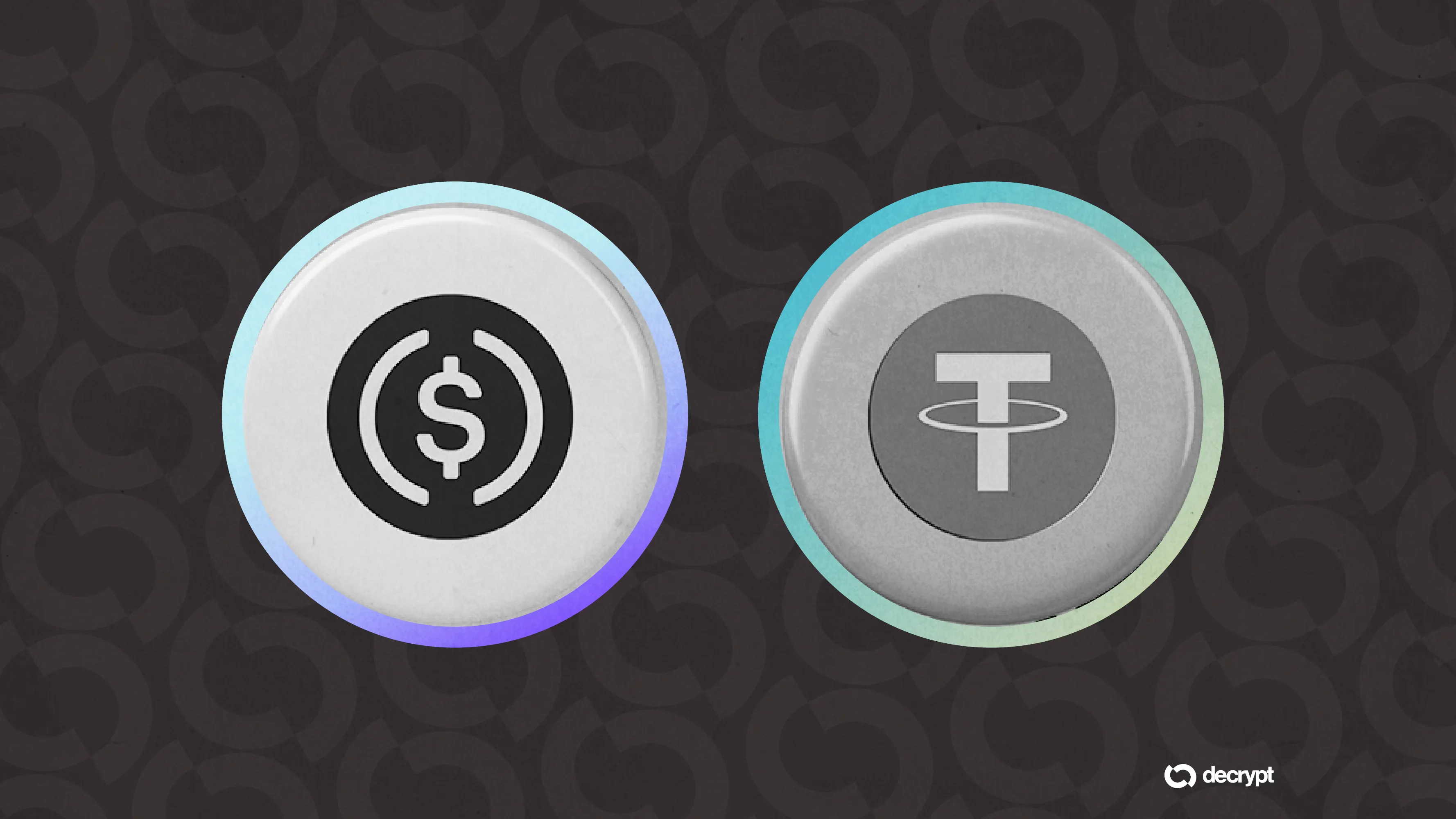
Most Americans still don't know what a stablecoin is. Offer them the safety net of a bank account, though, and a majority say they'd use one. That's the principal finding from Visa's Money Travels 2026 report, released Wednesday. In a hypothetical scenario where stablecoins came with bank-level fraud protection and deposit insurance, the share of Americans willing to use them for international transfers jumped from 36% to 56%, the payments giant said. Myriad: Where does Ethereum go next? Click t...

Law and Order
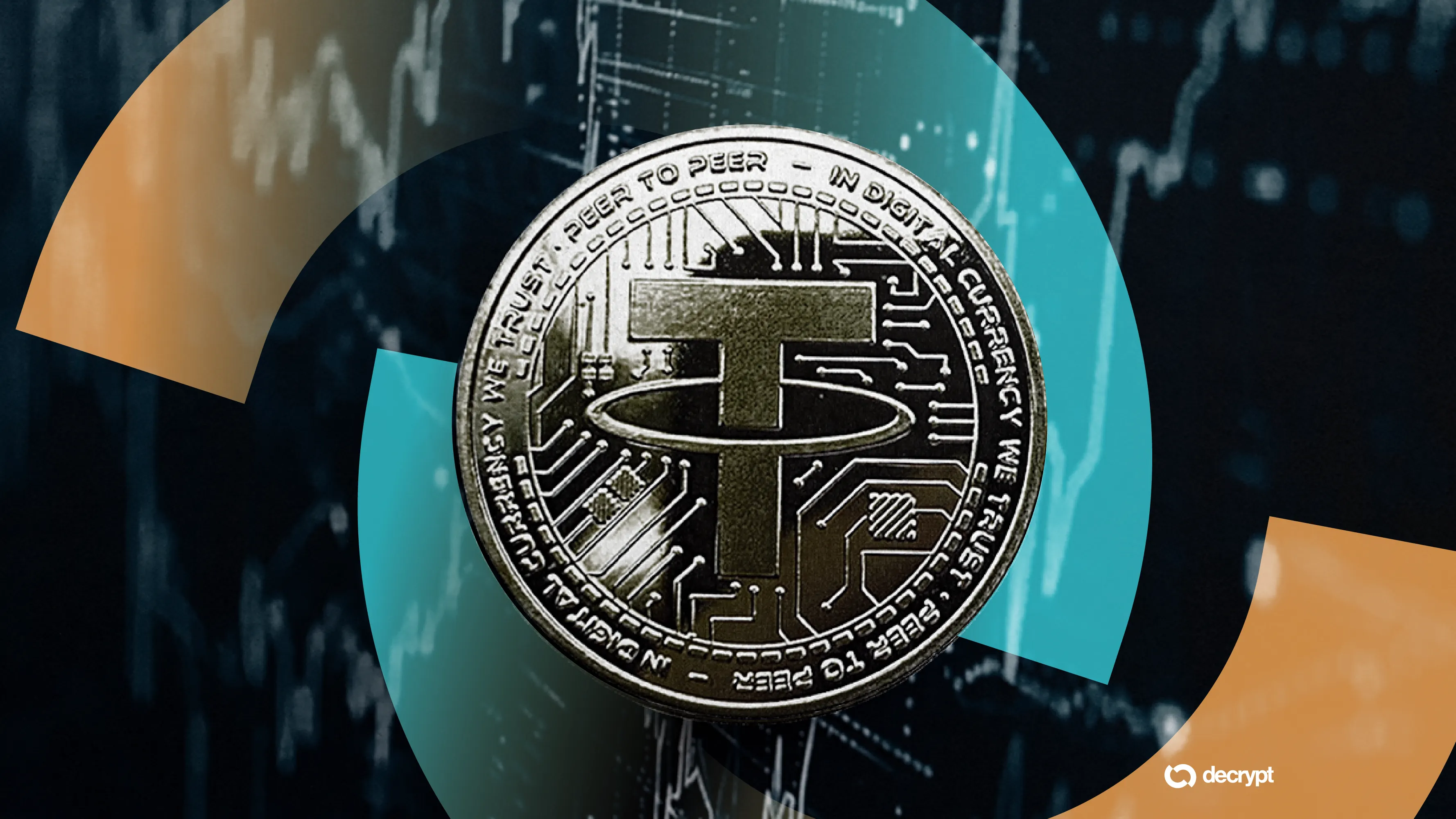
The U.S. Secret Service froze $52.8 million in cryptocurrency linked to Xinbi Guarantee on September 8, a Chinese-language marketplace that runs on Telegram and sells the tools scammers need to defraud people worldwide. The government agents worked with Blockchain analytics firm Elliptic to identify and freeze the funds. “Elliptic has been tracking Xinbi and its wallet infrastructure for several years, and our intelligence directly enabled the freezing action, as well as the sanctions imposed on...
Law and Order
Two Thai businessmen sued Tether on Monday, claiming the stablecoin issuer froze roughly $42.4 million worth of USDT without legal authority. Nutthawat Rukthammachalern and Natthawat Kasamvilas filed the complaint in the U.S. District Court for the Southern District of New York. It names four Tether entities and concerns USDT held across ten Ethereum addresses. Myriad: Ethereum price this week? Click to make your prediction. According to the complaint, Tether blacklisted the addresses last Octob...
Business
Tokenized deposits could enable faster payments but make banks’ funding less stable, according to a report by the Dallas Federal Reserve. The report, published on Tuesday, examines how widespread adoption could affect bank liquidity and maturity transformation—the use of deposits available on demand to finance longer-term loans. Myriad: Crude oil's next move? Click to make your prediction. “Increasing adoption of distributed ledger technology—blockchain is the best known—has opened up digital pa...

Business
The top U.S. banking regulator says it will finalize its rules for stablecoin issuers by November, moving to beat a fast-approaching deadline for the country's landmark digital-dollar law. Jonathan Gould, head of the Office of the Comptroller of the Currency, laid out the timeline Wednesday at the Wyoming Blockchain Symposium, an event hosted by SALT in Jackson. He said the agency is working at a rapid pace and expects to publish a final rule by November as it weighs feedback gathered from the c...
Law and Order
The U.S. Department of the Treasury proposed rules Monday defining which stablecoins can be issued or sold in the United States under the GENIUS Act. The proposal implements Section 3 of the GENIUS Act, signed into law last summer. According to the proposal, beginning January 18, 2027, stablecoin issuers generally must obtain a federal or state license. Platforms can also sell foreign-issued stablecoins, but only if the foreign issuer complies with U.S. legal orders and agreements between the U....
Business
Tether said Thursday that Big Four accounting firm KPMG issued an unqualified audit opinion—industry jargon for the best possible result—-on the 2025 financial statements of Tether International, the company behind the world’s largest stablecoin USDT. In a post announcing the audit, Tether called the review the “largest inaugural financial audit in history,” saying KPMG examined Tether’s assets, liabilities, income, cash flows, internal systems, records, counterparties, and supporting documentat...

Law and Order
A former FBI supervisory special agent has been charged with stealing nearly $1 million in cryptocurrency from wallets tied to FBI counterintelligence investigations, according to court documents that also detail how he later asked ChatGPT for advice on investing the money and relocating overseas. On Friday, Patrick Steven Yaroch was charged with interstate transportation of stolen goods and receipt of stolen goods. Prosecutors allege the thefts occurred between early 2025 and July 2026 while Ya...
Business
Tether reported $1.5 billion in net operating profit for the second quarter, a nearly 50% increase against Q1 2026, as the stablecoin issuer increased USDT in circulation, expanded its reserve surplus to more than $4 billion, and added to its gold holdings despite a weaker stablecoin market. The company reported the results Friday in its latest quarterly attestation. Tether said that as of June 30 it held about $187.75 billion in assets against approximately $183.64 billion in liabilities, leavi...
Law and Order
The U.S. Treasury's Office of Foreign Assets Control sanctioned multiple cryptocurrency wallets tied to Iran's Central Bank and the Islamic Revolutionary Guard Corps on Tuesday, with stablecoin issuer Tether freezing over $131 million across four addresses on the Tron blockchain. Treasury Secretary Scott Bessent confirmed the move in a post on X, vowing the U.S. would "aggressively follow the money and deny the Iranian regime access" to illicit funds. Separately, the Treasury sanctioned seven in...
Stay updated with our latest news, offers, and insights. Subscribe for exclusive updates delivered straight to your inbox.