




In brief
- "The Odyssey" director Christopher Nolan has warned that younger film audiences are "utterly rejecting" generative AI.
- He argued that in filmmakers are showing a "renewed interest" in tactile storytelling after years of "heavily virtual environments."
- The emergence of generative AI has divided the top rank of filmmakers, with some embracing the technology and others rejecting it outright.
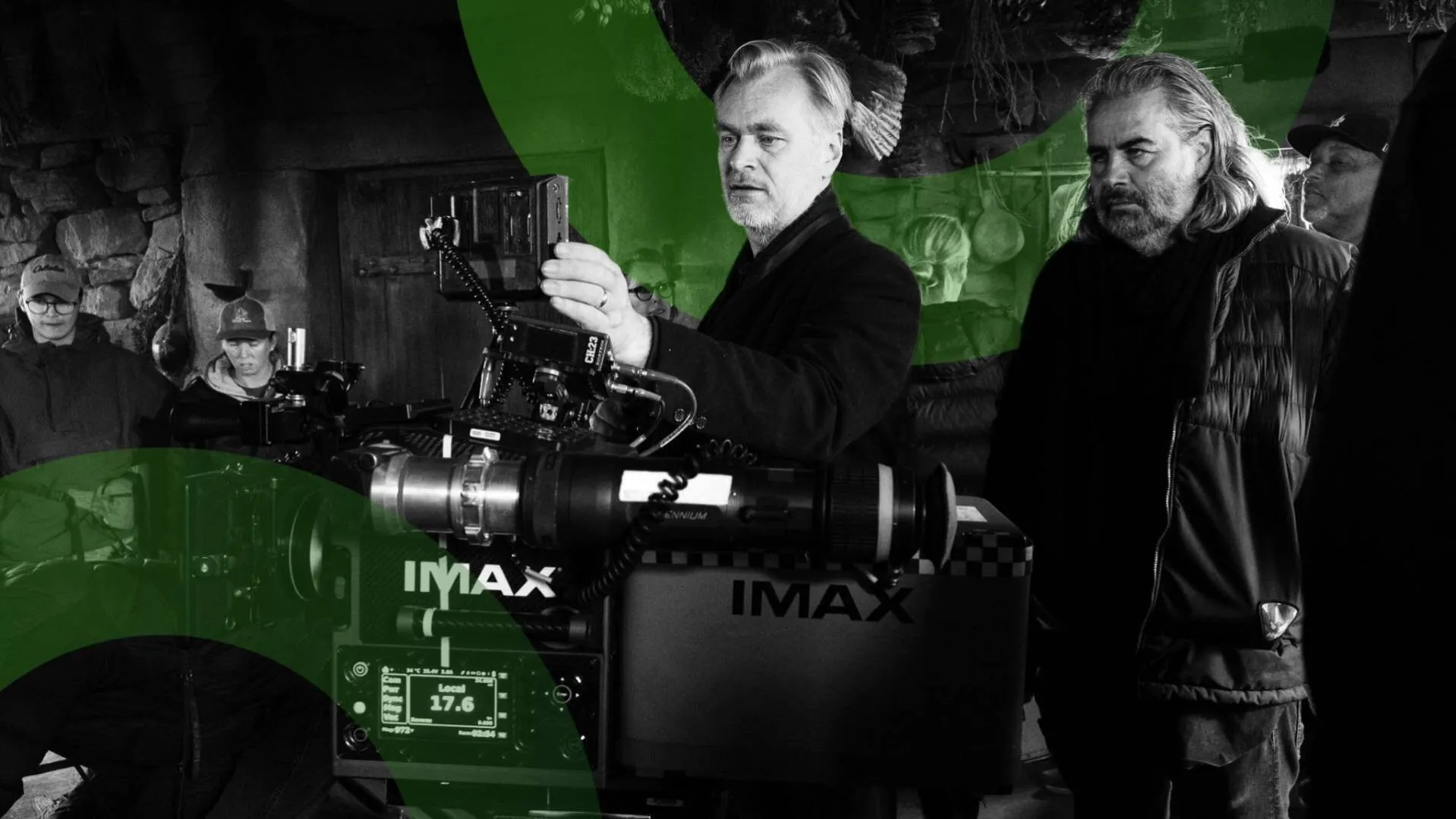
“The Odyssey” director Christopher Nolan famously doesn’t use a smartphone, so it’s perhaps unsurprising that he isn’t on board with the latest tech buzzphrase.
On the press tour for his latest effort, Nolan told The Telegraph that young audiences are “utterly rejecting” generative AI, adding that, “I’ve never seen a more rapid wholesale dismissal of a supposedly foundational jump in technology in my lifetime.”
He pointed to the reaction of his four children, in their late teens and early 20s. “Their judgment of AI slop has been immediate and harsh,” Nolan said. “They see it for what it is very quickly—and it’s much easier for them to identify it—because it grew out of an online world they know really well.”
The technology has hit at “exactly the wrong time” for filmmaking, he argued, pointing to a “renewed interest in more tactile, more real forms of storytelling” after a glut of films featuring virtual environments.
Nolan’s own blockbusters have become famous for their spectacular in-camera effects work, whether crashing a 747 into a building for “Tenet,” landing a Spitfire on a beach for “Dunkirk” or planting entire crops of corn for a chase scene in “Interstellar.”
That said, he’s not averse to using computer-generated VFX himself, like Two-Face’s scarred visage in “The Dark Knight,” and he conceded that not every aspect of generative AI is necessarily “useless or meaningless.”
Generative AI and filmmaking
Generative AI has caused a rift in the film industry, with some creatives openly coming out against the technology and others embracing it. Among the former camp are “Pan’s Labyrinth” director Guillermo del Toro, who has led chants of “fuck AI” on stage, and Steven Spielberg, who has dismissed the technology as an “empty chair with a laptop on it.”
On the other side of the fence are the likes of Martin Scorsese, who has joined AI firm Black Forest Labs as an adviser, and “Terminator 2” director James Cameron, who sits on the board of Stability AI. Ben Affleck has become a convert to the technology, having sold his AI startup InterPositive to Netflix after previously doubting that the technology would be able to “write anything meaningful” or create films “from whole cloth.”
While filmmakers debate among themselves, AI companies are pressing ahead with video creation tools like Utopia’s PAI, which aims to maintain consistency of output across cuts and scenes.