





In brief
- President Donald Trump signed an executive order aimed at strengthening U.S. cybersecurity with advanced AI tools.
- The order establishes a voluntary framework for identifying and reviewing powerful AI models before broader release.
- The move comes weeks after Trump delayed a similar proposal, saying parts of it could weaken America's AI lead over China.
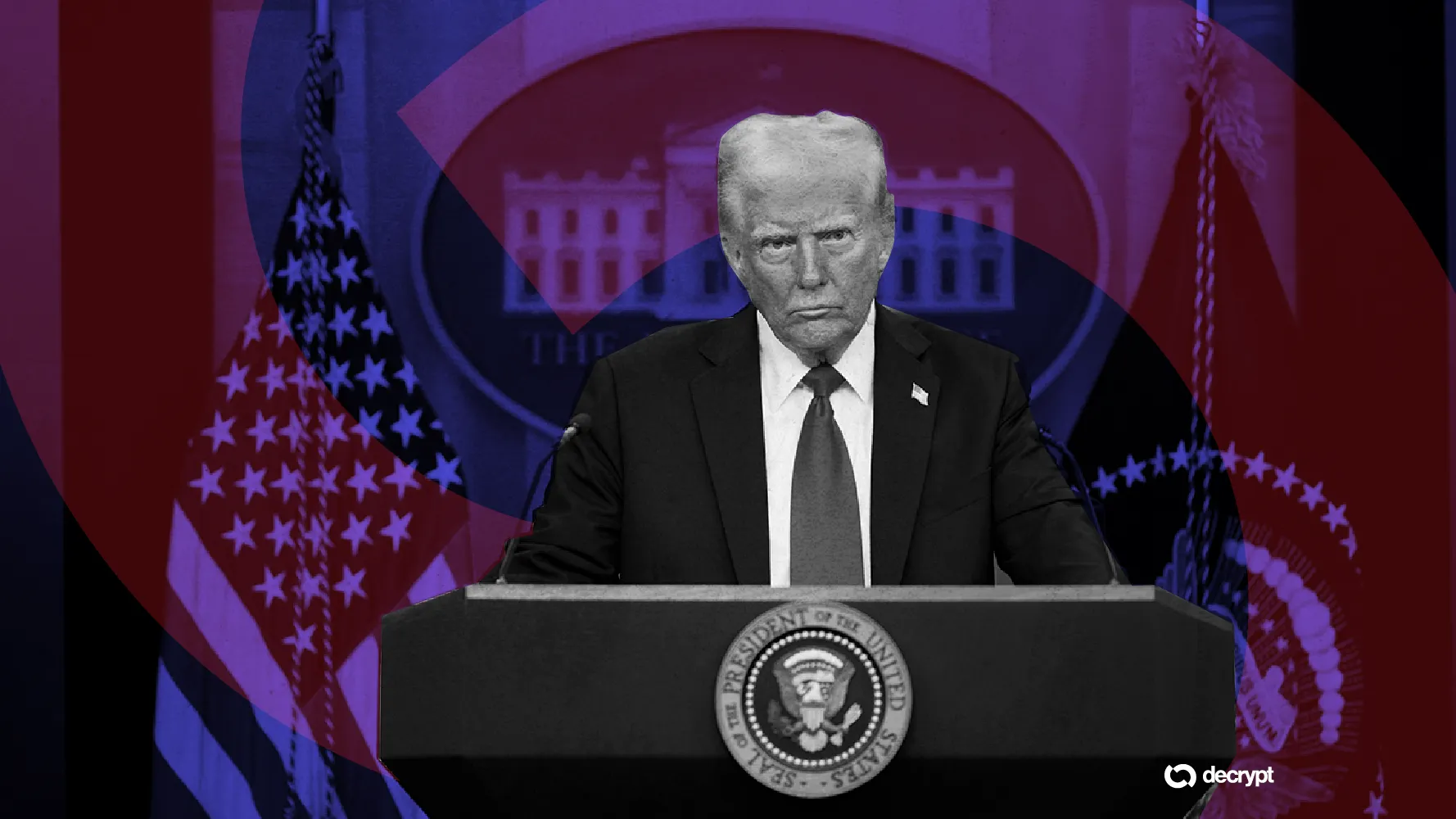
President Donald Trump on Tuesday signed an executive order aimed at strengthening U.S. cybersecurity with advanced artificial intelligence while expanding cooperation between federal agencies and leading AI companies.
The order, titled "Promoting Advanced Artificial Intelligence Innovation and Security," directs agencies to accelerate the use of AI-powered cybersecurity tools, create an AI cybersecurity clearinghouse, and establish a process for identifying advanced AI models.
“Advanced AI capabilities make our nation stronger, but also introduce new national security considerations that require coordinated action across executive departments and agencies (agencies), and components,” the executive order reads. “As these capabilities evolve, my administration will continue to work closely with industry to ensure that the best and most secure technology is deployed rapidly to confront any and all threats to our country.”
The order also directs agencies to establish a classified review process under which the National Security Agency would determine whether advanced AI systems qualify as covered frontier models.
Developers will be able to voluntarily provide those models to the government for evaluation “for a period of up to 30 days before they plan to release such models to other trusted partners.”
In May, Trump delayed signing a similar executive order, saying parts of the proposal could slow U.S. AI development and weaken America's position in its competition with China.
Critics of Trump’s executive order say the framework relies too heavily on voluntary cooperation from the AI companies it is meant to oversee.
“Models powerful enough to threaten cybersecurity and national security warrant real oversight,” J.B. Branch, AI governance and technology policy counsel at consumer advocacy nonprofit Public Citizen, said in a statement. “Congress and the administration should enact comprehensive federal AI legislation with enforceable safeguards, transparency requirements, independent testing, and meaningful protections for workers, consumers, children, and civil rights."
The effort to draft an AI-focused executive order gained momentum after concerns surrounding Anthropic's Claude Mythos model, which demonstrated an ability to identify software vulnerabilities and raised questions among officials about the national security implications of increasingly capable AI models.
In April, following the reveal of Mythos, U.S. Treasury Secretary Scott Bessent and then Federal Reserve Chair Jerome Powell reportedly convened a meeting with Wall Street bank CEOs, warning about cybersecurity risks tied to a new artificial intelligence model.
Despite these concerns, Anthropic has continued to roll out limited access to Mythos. On Tuesday, the Claude AI developer said it is expanding access to its Claude Mythos AI model through Project Glasswing, a program meant to let tech and security firms and governments discover and address potential exploits before the powerful model is publicly launched—which the company hinted last week would be “in the coming weeks.”
While sweeping, the executive order also seeks to reassure AI developers that the new framework will not create a formal approval process for releasing new models. The order also comes as Trump attempts to establish a federal regulatory framework around AI as a growing number of states move forward with their own legislation.
The order also calls for tougher enforcement against criminal uses of AI, including breaching any public or private information technology system, or “employing AI agents to unlawfully access data or information that is subsequently used for a criminal or unlawful purpose.”
Last month, federal prosecutors charged two men with using AI to generate and distribute sexually explicit images of women without their consent, marking one of the first major enforcement actions under the new Take It Down Act.
Daily Debrief Newsletter
Start every day with the top news stories right now, plus original features, a podcast, videos and more.
Join 72,000+ readers