




Morning Minute is a daily newsletter written by Tyler Warner. The analysis and opinions expressed are his own and do not necessarily reflect those of Decrypt. And check out our new daily news show covering all of the top stories in 5 minutes, downloadable on Apple Pod or Spotify.
GM!
Today’s top news:
- Crypto majors fall 1-2% as BTC goes sub-$60k before rebounding
- Micron stock jumps 19% pre-market after massive earnings beat, lifts markets
- MSTR and STRC fall to new 1-year lows as Saylor concerns grow
- Kalshi seeks $40B valuation in latest raise, pacing to $25B+ in volume this month
- Brian Armstrong hints at more acquisitions for Coinbase following Deribit deal

 →
→📉 Strategy’s MSTR and STRC Crash to 52-Week Lows
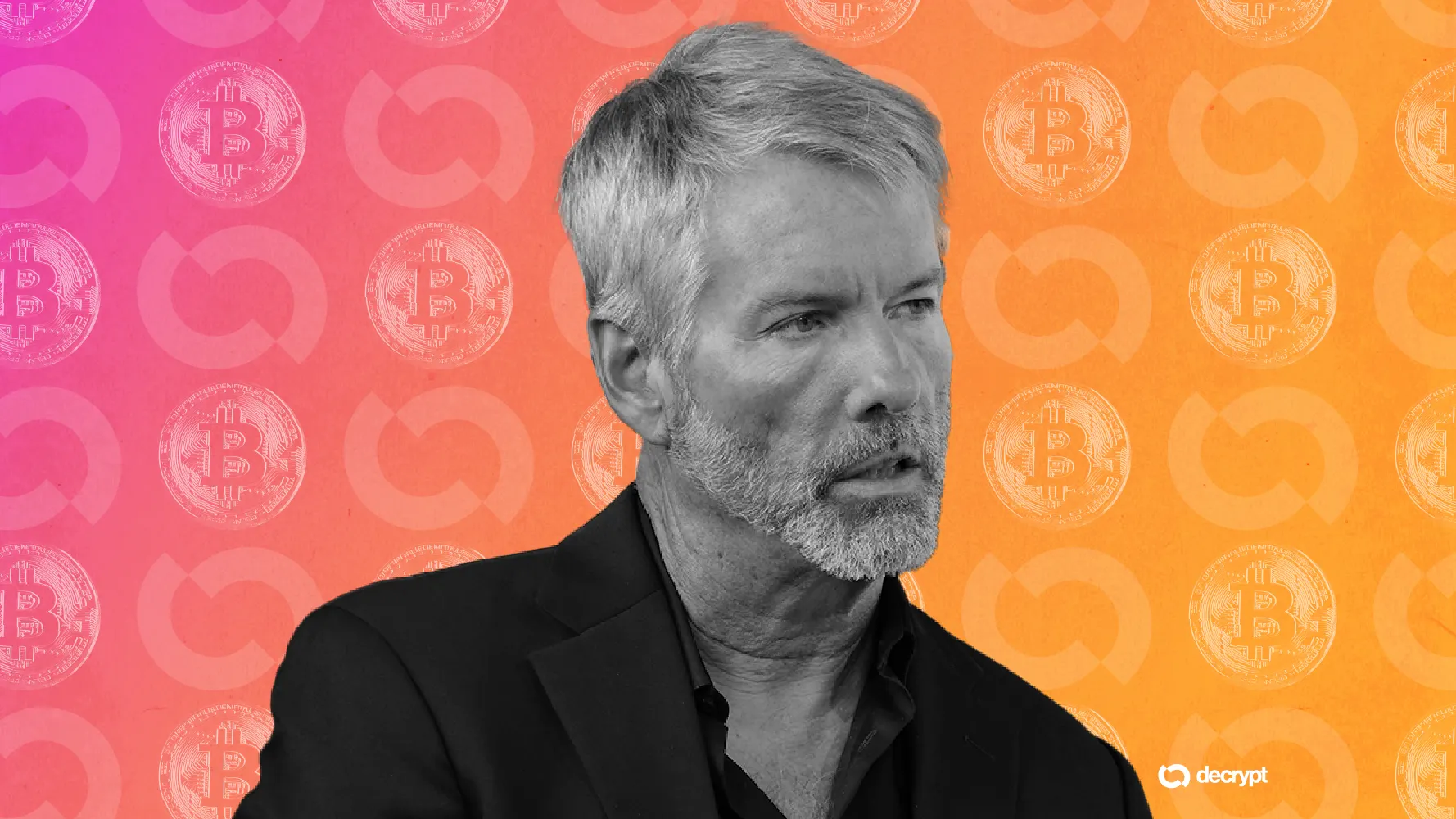
Strategy’s common stock and its preferred shares both cratered to 52-week lows on Wednesday. The treasury model Michael Saylor built is being stress-tested in real time.
MSTR fell 9.35% to $94.13, touching a 52-week low of $92.28 intraday, a staggering fall from its 52-week high of $457.22. STRC, the dividend-paying preferred share Saylor has leaned on to fund Bitcoin purchases, dropped 7.41% to $80.84, also a 52-week low and now well below its $100 par value. Bitcoin itself slid to $59,200 during the selloff, but recovered to $61k after Micron smashed earnings. Both MSTR and STRC recovered modestly after hours as well.
The billion-dollar question now—will the reckoning reaching a head? And if so, when? Monday’s $300 million cash raise was meant to steady STRC, and three days later it printed a new low anyway. It seems clear that the market isn’t convinced cash alone fixes the problem. The deeper issue is the doom loop. The more MSTR falls, the less ammo Saylor has to buy Bitcoin or even raise cash to pay off his debt (although he does have ~10 months debt covered with his current cash pile).
Some think Saylor should sell a massive chunk of BTC now and just reset. Others think that BTC whales are actually trying to blow up Saylor and drive BTC lower to force his hand. We can’t be sure all the mechanics at play. But one thing is certain—the roller coaster ride isn’t over yet. Buckle up…
It makes intuitive sense to me that there would be a group of sophisticated, deep-pocketed BTC bulls that are currently trying to figure out how to collapse the MSTR cap structure by any means necessary, so as to force a puke of the BTC currently held.
Call it the…
— Travis Kling (@Travis_Kling) June 24, 2026
🎯 Kalshi Targets a $40 Billion Valuation as Sports Betting Drives Volume
Kalshi is in talks to raise fresh funding at a roughly $40 billion valuation, according to a Financial Times report. That’s nearly double the $22 billion valuation from the $1 billion round it closed just 3 months ago in April.
The jump comes as trading volume exploded to more than $17 billion last month and is pacing to $25B+ in June, up from under $5 billion a year earlier, with sports-related contracts making up about 65% of that total. For perspective, Kalshi has already cleared $5B+ in World Cup volume and the tourney isn’t half over.
To give credit where it’s due, it’s not just sports driving Kalshi’s growth. Kalshi’s crypto markets have grown into a $1B/week market sector as well, 20x growth since December 2025. And now they’re rolling out legal perps which should drive those volumes even higher. Overall, Kalshi has nearly 3x the open interest of Polymarket across market sectors, with $1.1B compares to $484M.
That growth is leading to a massive spike in fees as well. Last June, Kalshi made $8M in fees. This June, they already cleared $180M with 5 days left in the month. That puts them over $800M in fees in H1 2026, with 10-20% growth month-over-month. That $40B price tag may very well look cheap at the end of the year…
🌎 Macro Crypto and Markets
- Crypto majors are mostly red; BTC -3% at $61.2k; ETH -3% at $1,630; SOL -3% at $68; HYPE even at $62.75
- STABLE (+8%), AAVE (+6%) and MORPHO (+5%) led top movers
- Oil -2% at $69.40; Gold -0.2% at $4,000
- Stock futures are big green after Micron’s earnings beat; DOW +0.3%, Nasdaq +2.2%
- Trump refused to sign the housing bill containing the CBDC ban and abruptly cancelled the signing celebration, demanding Congress approve an elections bill first, a move that pauses the CBDC prohibition and could delay or imperil the CLARITY Act
- Coinbase CEO Brian Armstrong said more acquisitions are possible after its $2.9 billion Deribit deal, with a focus on international targets that can speed up product and business growth
- Binance withdrew its MiCA license application in Greece and said it will pursue approval in another EU state, scrambling to preserve its European access before its current permissions lapse on June 30
- Binance founder CZ said he’s been misunderstood and hopes to help boost the US crypto industry
- A New York man was sentenced to 15 months in prison for scamming investors by impersonating well-known crypto influencers to solicit funds
Corporate Treasuries & ETFs
- The Bitcoin ETFs saw $469M in net outflows on Wednesday, the most in 3 weeks; the ETH ETFs saw $30M in outflows
- The HYPE ETFs saw 0 inflows on Wednesday
Meme Coin Tracker
- Meme leaders were red; DOGE -4%, SHIB -4%, PEPE -7%, PENGU -3%, TRUMP -3%, BONK -4%; recent runner Memecore dropped 71%
- World (+550%), Hama (+61x) and TripleT (+25%) led movers on Solana
- Base movers included EDGE (+40%) and SYND (+44%)
- Meme-stock traders piled into Wendy’s as a possible next GameStop, sending the fast-food chain’s shares sharply higher as retail investors hunt for a fresh rallying cause
📈 Myriad Market of the Day
💰 Token, Airdrop & Protocol Tracker
- Kalshi sued Illinois over a new state tax on prediction markets that would take 15% of gross receipts from sports-related wagers starting next week, the latest clash over how these markets get regulated and taxed
🚚 What is happening in NFTs?
- NFT leaders were mixed; Punks +1.6% at 32 ETH, BAYC -3% at 8.8 ETH, Pudgy -3% at 4.5 ETH; Hypurr’s -2% at 196 HYPE
- Opepen (+17%) and NPC (+14%) led top movers
Daily Debrief Newsletter
Start every day with the top news stories right now, plus original features, a podcast, videos and more.
Join 72,000+ readers