





In brief
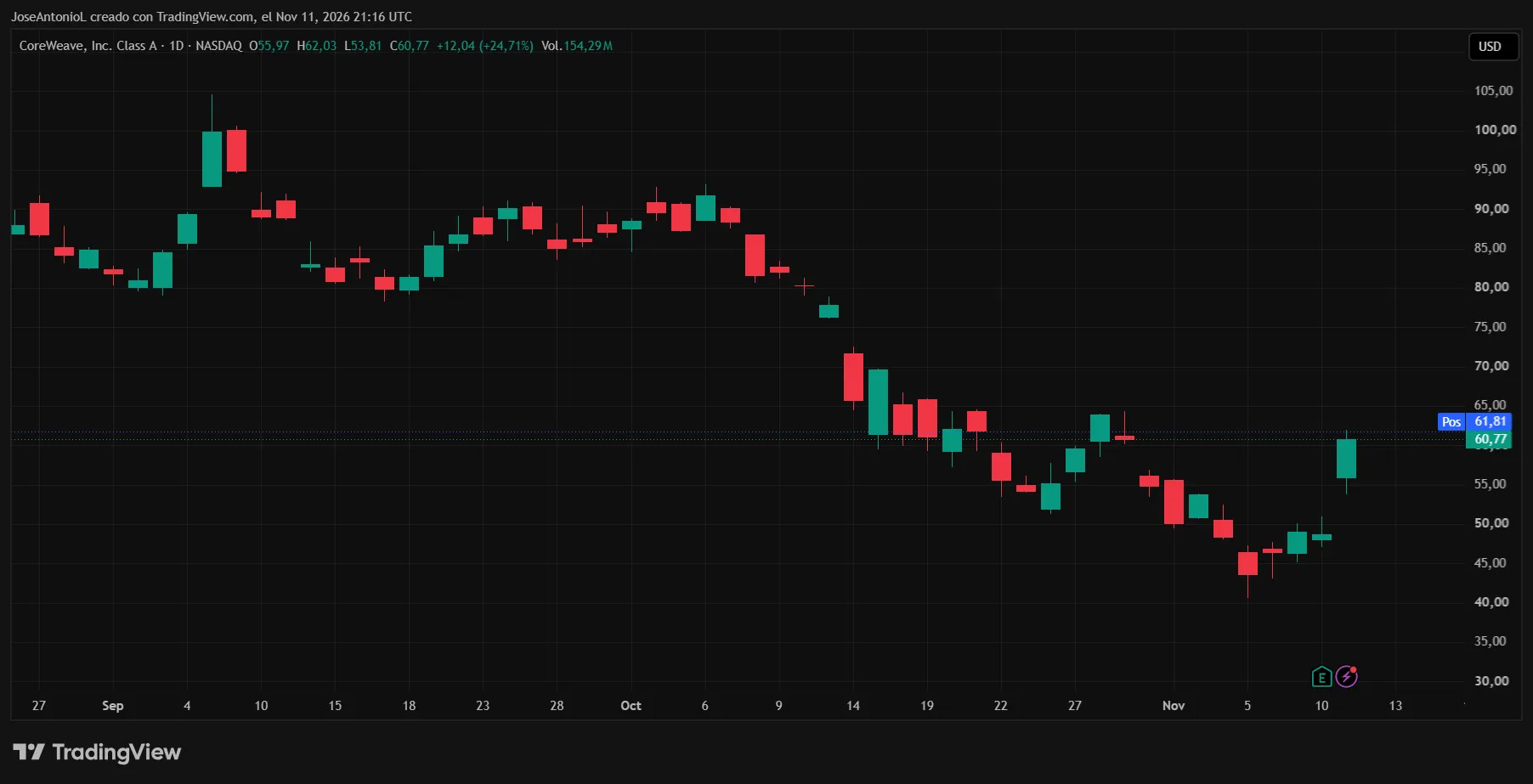
- CoreWeave shares jumped 24.7% Wednesday after quarterly revenue reached $3.66 billion, up 168% from a year earlier.
- Nvidia is both an investor in CoreWeave and the supplier of its AI chips, making the results an important signal for the wider AI infrastructure trade.
- A $132.5 billion revenue backlog and expected customer prepayments eased financing fears, even as CoreWeave posted a $709 million net loss.
Nvidia-backed CoreWeave soared 24.7% Wednesday, helping revive the AI trade after weeks of selling, as the company reported surging demand for the expensive computing hardware powering the artificial intelligence boom.
The cloud provider posted $3.66 billion in third-quarter revenue, up 168% from a year ago, and raised its 2026 sales forecast to $13 billion to $13.3 billion. The results also helped lift Nvidia, along with AI infrastructure stocks including Nebius, IREN, Oracle and Applied Digital.
For investors watching Nvidia, CoreWeave offers a useful look at what happens after the chipmaker sells its processors.

CoreWeave buys Nvidia GPUs, installs them in data centers, and rents that computing power to companies developing or running AI models, including OpenAI and other major customers.
That makes its revenue growth evidence that businesses are still willing to pay for AI computing capacity. It does not, by itself, establish that the enormous spending required to supply that capacity will produce sustainable profits.
Why Nvidia has so much riding on CoreWeave
Nvidia's connection goes well beyond a typical supplier relationship. In January, Nvidia invested another $2 billion in CoreWeave shares at $87.20 each, expanding a business arrangement aimed at building more than five gigawatts of AI data-center capacity by 2030.
The companies also agreed to introduce new Nvidia technology across CoreWeave's infrastructure, including its Rubin platform and Vera CPUs. That makes CoreWeave an important showcase and customer for future Nvidia hardware, not just the chips already installed.
“Together, we’re racing to meet extraordinary demand for NVIDIA AI factories,” Nvidia CEO Jensen Huang said when the expanded deal was announced in January.

 →
Nvidia also has a $6.3 billion initial agreement to buy CoreWeave's unused computing capacity through April 2032, subject to the contract's conditions. In practice, the arrangement gives CoreWeave a buyer for capacity it cannot sell elsewhere, while Nvidia gets access to cloud computing built around its own chips.
The relationship explains both the excitement and some of the criticism surrounding AI investment. Nvidia sells the hardware, invests in a company buying that hardware, and has also committed to purchasing some of the computing services it helps create. Inventors call it “circular finance.” AI bros call it a meme. Skeptics call it a warning sign.
Nvidia gives money to OpenAI who gives money to Coreweave who gives money to Nvidia who gives money to OpenAi who gives money to Coreweave who gives money to OpenAi who gives money to Nvidia pic.twitter.com/3UFfK7KwJv
— Q-Cap (@qcapital2020) September 22, 2025
Those are real commercial agreements, but the overlapping financial relationships complicate attempts to measure independent demand.
What the earnings say about the AI boom
CoreWeave reported $132.5 billion in revenue backlog, meaning contracted business that it expects to deliver over time, not money already in the bank. The company says it is working with customers including OpenAI, Cohere, and Perplexity, and had more than 1.7 gigawatts of active power capacity at the end of September.
“This was a breakout quarter for CoreWeave, with revenue increasing by more than $1 billion sequentially,” CEO Michael Intrator said in the company's earnings release.
The company also expects about $9 billion in customer prepayments and deposits over the next three months. Getting paid before delivering all the contracted services could reduce its immediate need to borrow at a time when investors have become increasingly uncomfortable with the debt financing AI data centers.
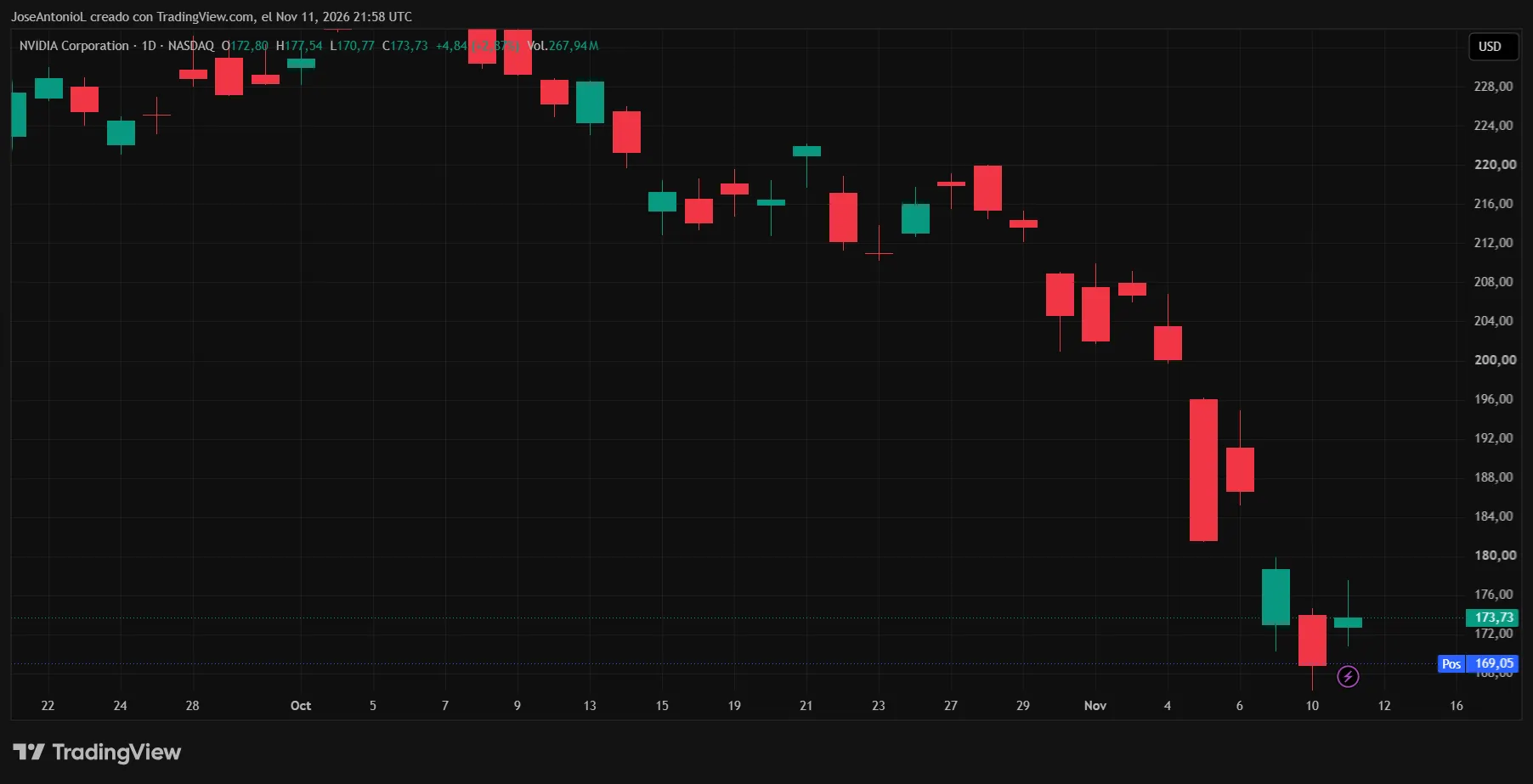
The market reaction extended beyond CoreWeave. Wednesday's rebound touched Nvidia shares and the broader technology market, with the Nasdaq gaining 1.6%. CoreWeave's report arrived as investors were trying to decide whether recent AI-stock losses reflected weakening demand or anxiety about the cost of meeting it.
These specialized GPU-rental businesses are known as neoclouds. Some—including CoreWeave, which began as an Ethereum miner—have roots in crypto infrastructure, where operators were already accustomed to running large amounts of power-hungry hardware.
Bernstein analysts described the quarter as “about the best quarter we could have asked for,” according to Reuters, but warned CoreWeave would be among the companies hit hardest if the shortage of available AI computing capacity begins to ease.
The Nvidia partnership does not remove that risk. Newer processors can make older GPUs less competitive, while electricity availability, construction delays, and higher borrowing costs can all squeeze returns. An oversupply of AI computing would also put pressure on the rental prices CoreWeave earns.
Daily Debrief Newsletter
Start every day with the top news stories right now, plus original features, a podcast, videos and more.