





In brief
- Rep. Don Davis (D-NC) has introduced a bill barring federal candidates from trading contracts on their own races.
- Violations would draw a civil fine of $10,000 or three times any gain, whichever is larger.
- Platforms would get immunity for closing accounts, unwinding trades and reporting suspected breaches.
Candidates for federal office, their spouses and their campaign committees would be barred from trading prediction market contracts on their own elections under a bill introduced in the House on Monday.
The No Betting on Your Own Race Act, from Representative Don Davis (D-NC), would amend federal election law to make the trade a civil offense carrying a $10,000 fine per violation, or three times the net financial gain, whichever is greater.
We don't want our athletes to bet on their games. Candidates running for federal elected office should be treated exactly the same and should not be allowed to trade on their own election.
Candidates from different political parties have traded on their own races, and Congress… pic.twitter.com/gBDC8h4Tki
— Congressman Don Davis (@RepDonDavis) October 5, 2026
"We don't want our athletes to bet on their games," Davis tweeted. "Candidates from different political parties have traded on their own races, and Congress must bring an end to it."
The prohibition is drawn widely, covering the candidate, a spouse, a dependent child and any authorized committee. It encompasses contracts settling not only on who wins but on whether a person remains a candidate at all, and on their vote share, margin or placement. Indirect exposure counts, too, including inducing someone else to trade, holding a beneficial interest however titled, or funding another person's position knowing what it is for.
Much of the text is aimed at the exchanges rather than the candidates. Platforms and their staff would face no penalty under the section, and would be shielded from liability for acting in good faith to stop a breach, including restricting, suspending or closing an account and cancelling, voiding or unwinding a position. They could report suspected violations to the Commodity Futures Trading Commission, the attorney general or the Federal Election Commission without liability, and without telling the person reported.
To make screening possible, the FEC would have to publish a free, machine-readable list of every federal candidate, updated at least weekly, carrying each person's name, commission identifier, office sought and the dates they entered and left the race. The commission and state election boards would also have to notify candidates of the rules when they file.
There is a grace period of sorts. Holding or selling a position that becomes a covered contract when someone declares their candidacy is not an offense during whatever minimum divestment window the platform allows.
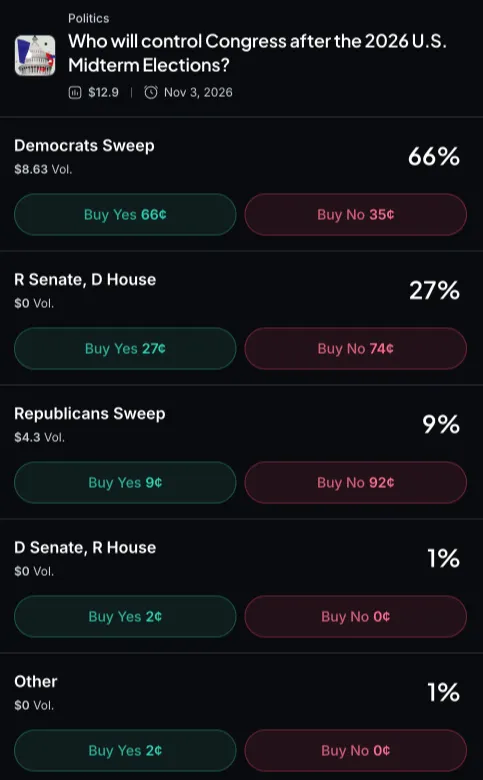
The definition of a political event contract in the bill runs beyond races, taking in caucuses, nominations, control of Congress and any other political or governmental event the CFTC designates by rule. The ban would apply to conduct from the date of enactment.
To date, exchanges have largely policed the issue themselves. Kalshi fined multiple congressional candidates earlier this year over bets on their own races, and has suspended candidates since. The CFTC is separately investigating former Representative Adam Kinzinger over trades tied to his own presidential pardon, and agency staff last month warned exchanges that contracts settling on the conduct of named individuals should be presumed open to manipulation.
Daily Debrief Newsletter
Start every day with the top news stories right now, plus original features, a podcast, videos and more.
Join 72,000+ readers