





In brief
- Polymarket launched Polymarket Perps on September 3 with an initial slate of 10 markets that expanded to 67 within hours, spanning crypto, stocks, indices and commodities with leverage up to 20x and no contract expiration.
- Leverage caps vary by asset: crypto, the S&P 500, oil, gold and silver support up to 20x, while individual stocks and other real-world assets top out at 10x, per Polymarket's own documentation.
- U.S. traders can't place Perps orders and are routed instead to Polymarket US, the company's separate CFTC-regulated exchange, a split that traces back to a 2022 CFTC settlement.
Polymarket, the prediction market platform that rose to fame during the 2024 presidential election, opened its perpetual futures product to traders on September 3, extending a platform built around yes-or-no election and sports bets into leveraged derivatives.
The new offering, called Perps, launched with an initial 10 markets—Bitcoin, Ethereum, Solana, HYPE, gold, silver, WTI oil, the S&P 500, the Nasdaq 100 and a contract tracking SpaceX shares—before expanding to 67 within hours, according to Polymarket's product page. Polymarket first teased the feature in April with a 10x leverage cap.
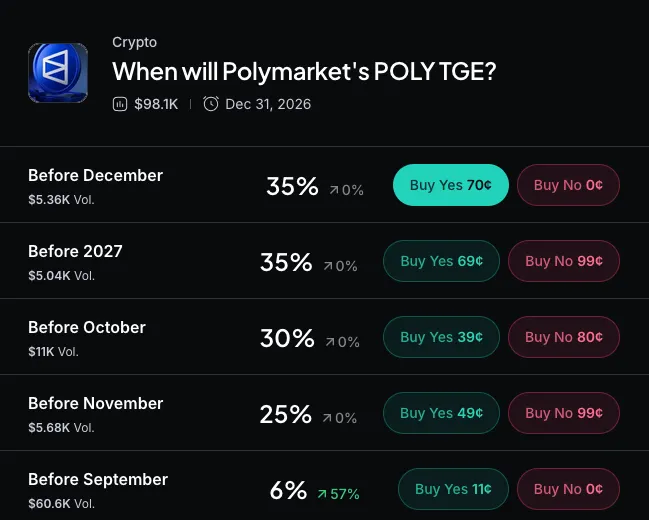
Perpetual futures work nothing like Polymarket's usual contracts, which settle at $1 or zero once an event resolves. A perp instead tracks its underlying asset's price continuously with no expiration date, and a funding rate moves payments between long and short traders every hour to keep the contract anchored to spot. That funding rate is capped at 4% per hour in either direction.
Polymarket's documentation caps crypto, the S&P 500, oil, gold, and silver at 20x, while individual stocks and other real-world assets—Tesla, Nvidia, Apple and Coinbase among 36 listed equities—max out at 10x. Maintenance margin sits at half the maximum leverage rate, so a fully leveraged 20x position can be liquidated after losing roughly 2.5% of its posted margin.
Polymarket promoted the launch on X, pitching a compound trade: go long Bitcoin, bet on the Fed's next move, and short the S&P 500's reaction, all from one account. The company also billed the product as carrying the deepest liquidity and lowest fees among crypto perps venues.
Polymarket Perps is live. https://t.co/ABYg1kZRZB
— Polymarket Perps (@Poly_Perps) September 4, 2026
None of it reaches Polymarket's American users. The company's own FAQ bars order placement from the United States, Canada, Cuba, Iran, North Korea, Syria, Crimea, Donetsk, and Luhansk.
U.S. traders get routed to Polymarket US, a separate CFTC-regulated exchange. That split followed Polymarket's 2022 settlement with the CFTC, which fined the company $1.4 million and ordered it to wind down noncompliant contracts after finding it had run an unregistered swaps facility. It has since returned to the U.S., but in a more limited fashion.
Kalshi beat Polymarket to the U.S. market by more than three months. The CFTC approved Kalshi's Bitcoin perpetual futures contract on May 29, letting the rival prediction market call it the first onshore perpetual futures product in the country. Kalshi has since filed for perpetuals on a dozen altcoins and a separate copper contract.
The bigger competitive test is Hyperliquid, the decentralized exchange that already dominates on-chain perpetuals trading—and, which according to President Donald Trump himself, is working with the CFTC to open itself up to U.S. traders very soon.
A Bloomberg report recently furthered that talk, with news that Hyperliquid is already in negotiations with Kraken parent company Payward to do exactly that.
Daily Debrief Newsletter
Start every day with the top news stories right now, plus original features, a podcast, videos and more.
Join 72,000+ readers