






In brief
- U.S. spot Bitcoin and Ethereum ETFs added $2.6 billion in net inflows for the week ending August 21, their best week since October 2025, while total assets under management jumped roughly $23 billion.
- Bitcoin ETF assets rose 25.4% to $96.1 billion and Ethereum ETF assets rose 35.9% to $14.3 billion, according to SoSoValue data.
- Bitcoin gained about 24% and Ethereum about 30% during the week after the Treasury doubled a bond-buyback program and a short squeeze wiped out billions in bearish bets.
U.S. spot Bitcoin and Ethereum ETFs picked up roughly $23 billion in total value last week. Only $2.6 billion of that came from new money. Everything else came from Bitcoin and Ethereum simply getting more expensive.
That distinction may get lost in the euphoria of a market rally. A crypto fund's total value—what's called assets under management, or AUM—grows for two separate reasons: fresh cash coming in the door, or the coins already sitting inside becoming worth more. Last week, almost all of the growth was the second kind.
Spot Bitcoin ETFs added $1.92 billion in net inflows for the week ending August 21, while Ethereum funds took in $697.2 million. Combined, that $2.6 billion was the strongest week for both fund categories since October 2025, when Bitcoin was closing in on its all-time high.
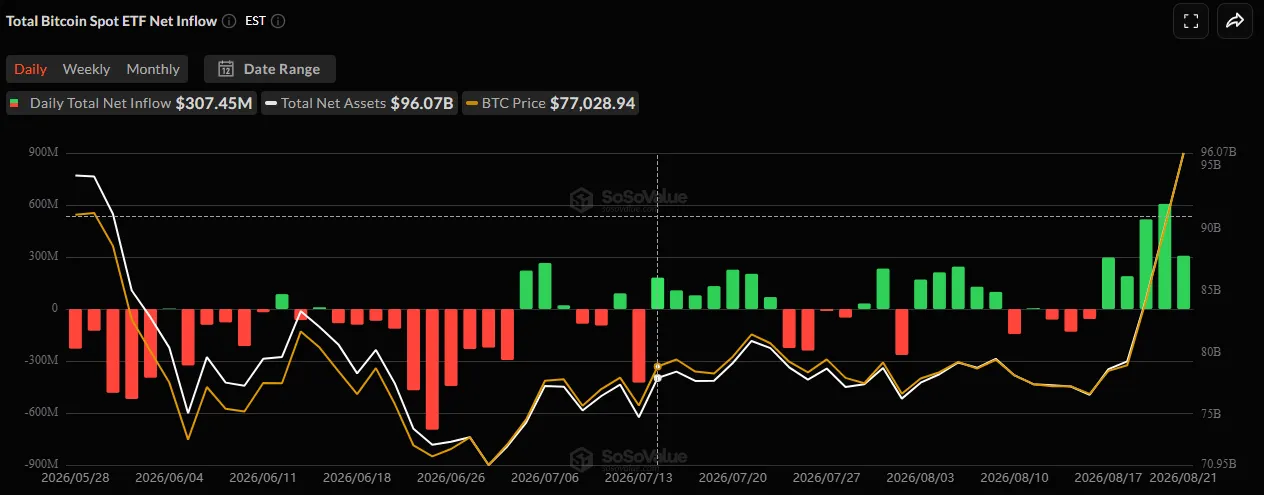
The AUM side moved much further. Bitcoin ETF assets climbed 25.4% to $96.1 billion from $76.6 billion. Ethereum ETF assets jumped 35.9% to $14.3 billion from $10.5 billion.
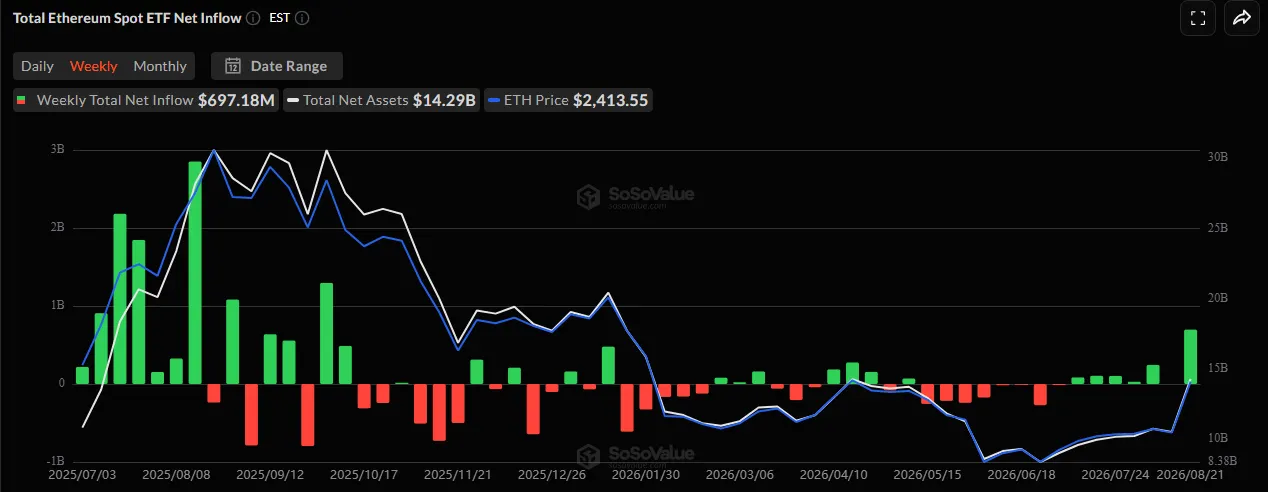
Add those together and total assets rose about $23.3 billion for the week. Strip out the $2.6 billion investors actually put in, and roughly $20.7 billion of that increase was pure price appreciation—Bitcoin and Ethereum becoming worth more while sitting exactly where they already were.
Why the coins got more valuable
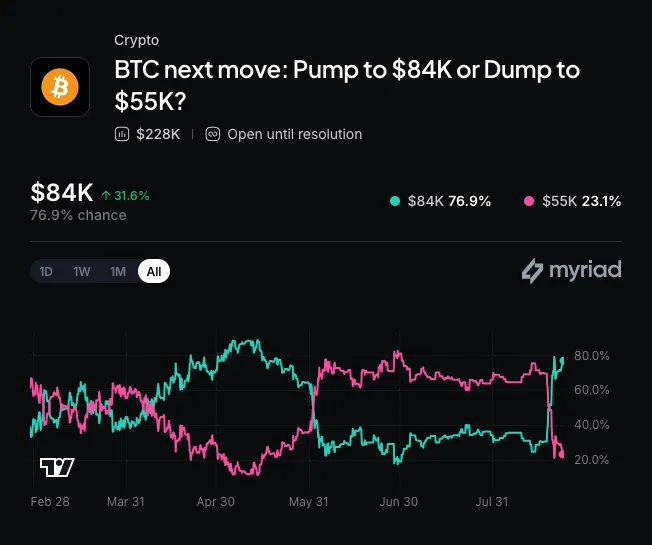
Bitcoin ran from around $62,000 to briefly above $79,000, a roughly 24% weekly gain and its best week since 2023. Ethereum climbed from under $1,900 to above $2,500, up about 30%.
Three separate forces pushed prices that hard. The clearest was the U.S. Treasury's move to double its long-bond buyback program—purchases of the government's own debt meant to support demand and lower borrowing costs—which weakened the dollar and pushed investors toward assets often used as inflation hedges, Bitcoin included.
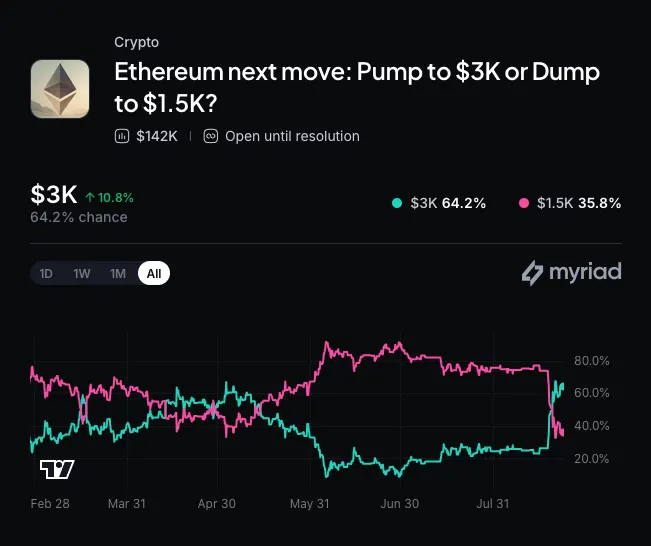
President Donald Trump also met crypto executives at the White House and pressed Congress on the Clarity Act, a bill meant to settle which regulator oversees which crypto assets. The third force did the most damage to skeptics: as prices broke through resistance, traders who had bet on Bitcoin falling got forced to buy back in at a loss to close those bets, a short squeeze that wiped out roughly $3 billion in bearish positions within 24 hours, with another $1 billion liquidated the day after. Each forced purchase pushed the price higher and triggered the next round of liquidations.
BlackRock's IBIT captured the largest share of the new money, at one point taking in 83 cents of every dollar that flowed into Bitcoin funds in a single day. XRP funds also drew fresh demand, pulling in $39.78 million and setting a record weekly volume of $271.74 million.
The rally hasn't erased 2026's damage. Bitcoin ETFs are still down in net outflows for the year, and Ethereum ETFs remain negative, narrowing the combined year-to-date deficit from $5.7 billion to $3.1 billion.
Daily Debrief Newsletter
Start every day with the top news stories right now, plus original features, a podcast, videos and more.
Join 72,000+ readers